Exhibitions of military equipment were dotted around the garrison area. We spent a couple of hours getting acquainted with all sorts of vehicles and equipment. I learned a whole lot of terminology and interesting facts.
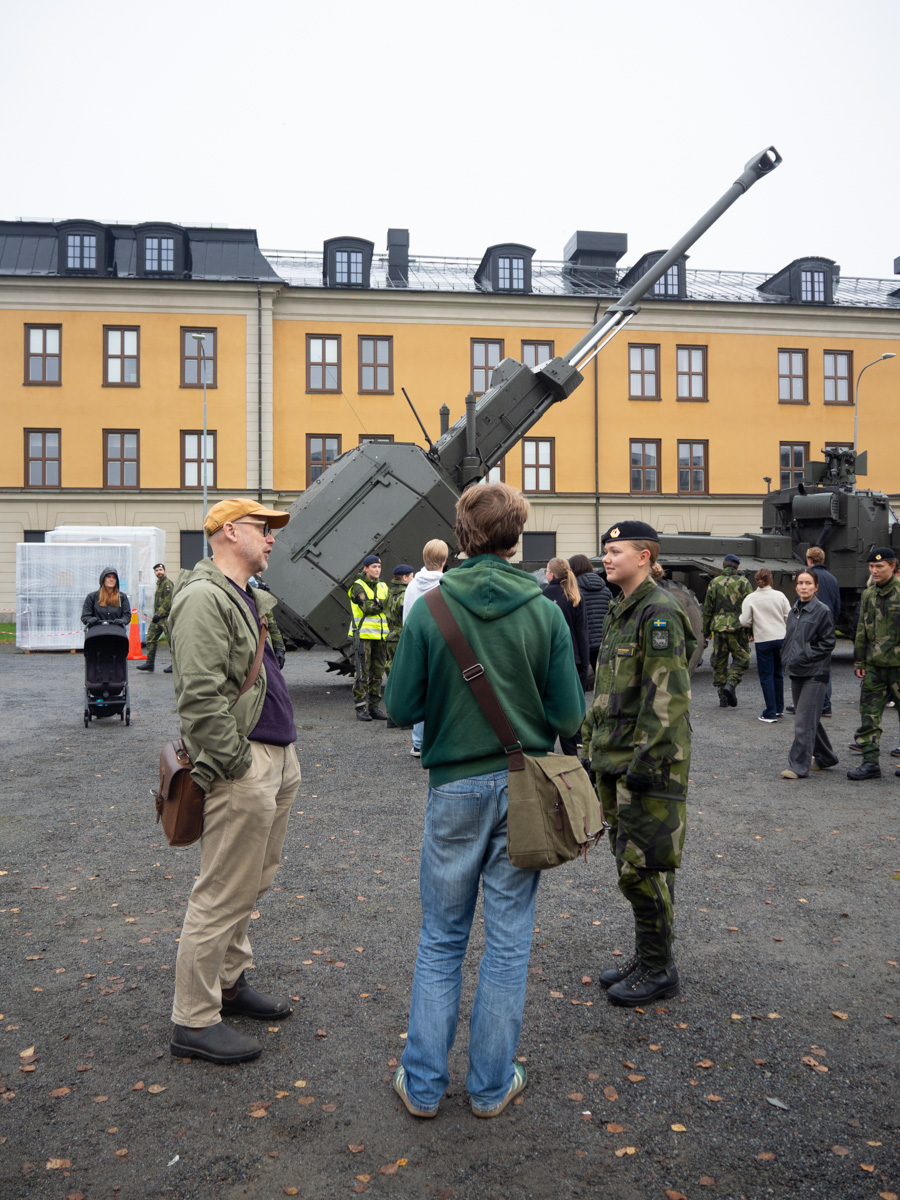
We started out next to the main square, where the A 8 regiment were showing off their stuff. Ingrid’s regiment is the I 19, an arctic armoured and and light infantry regiment (i.e. tanks, and troops on the ground). The A 8, their next-door neighbours, are an artillery regiment (i.e. cannons).
The Archer artillery system, I now know, is valued for being extremely mobile. It can be driven at 90 km/h, then stop, extend supports for stability, aim, fire, pull in the supports again, and be gone again in about a minute.
Next to Archer (and its friend Arthur there were tracked motor vehicles, almost like small mobile huts on treads, which you could actually get inside.
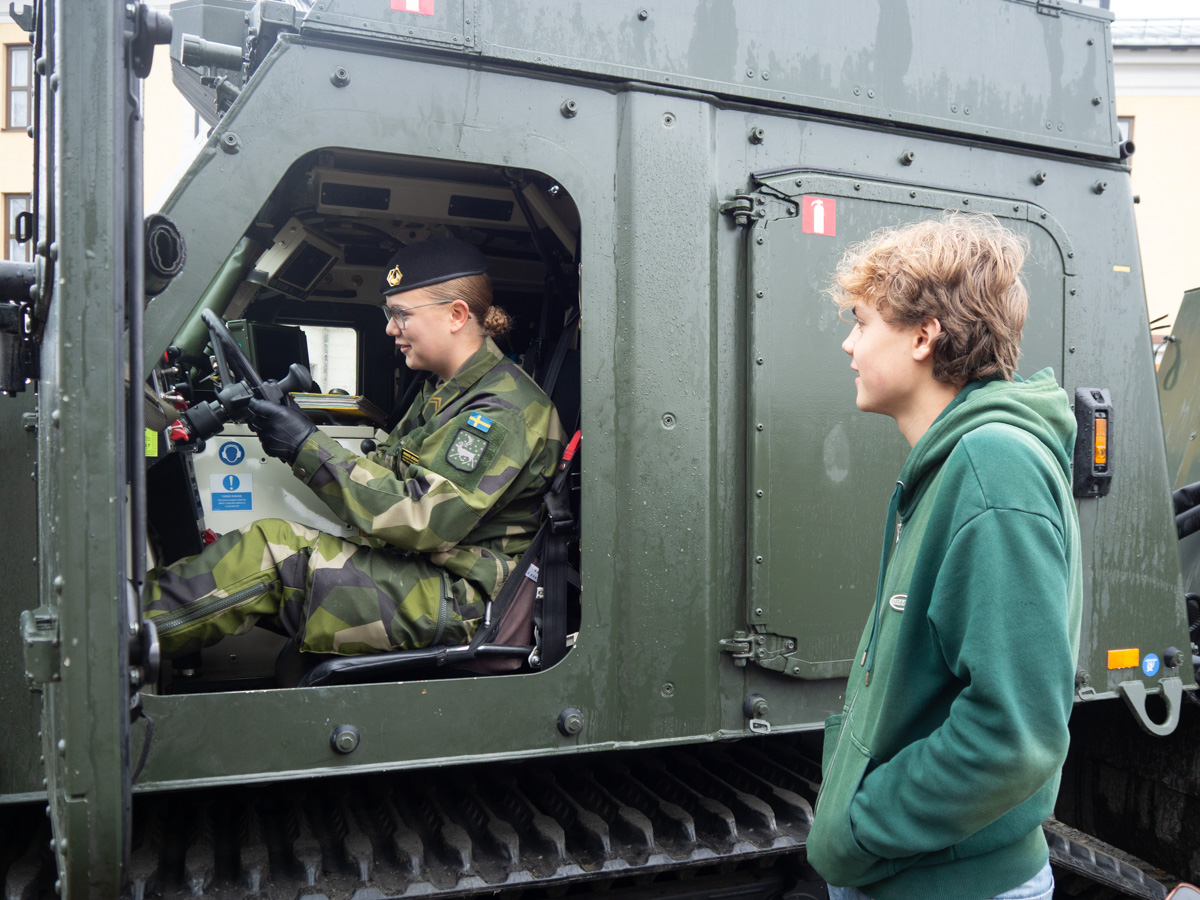
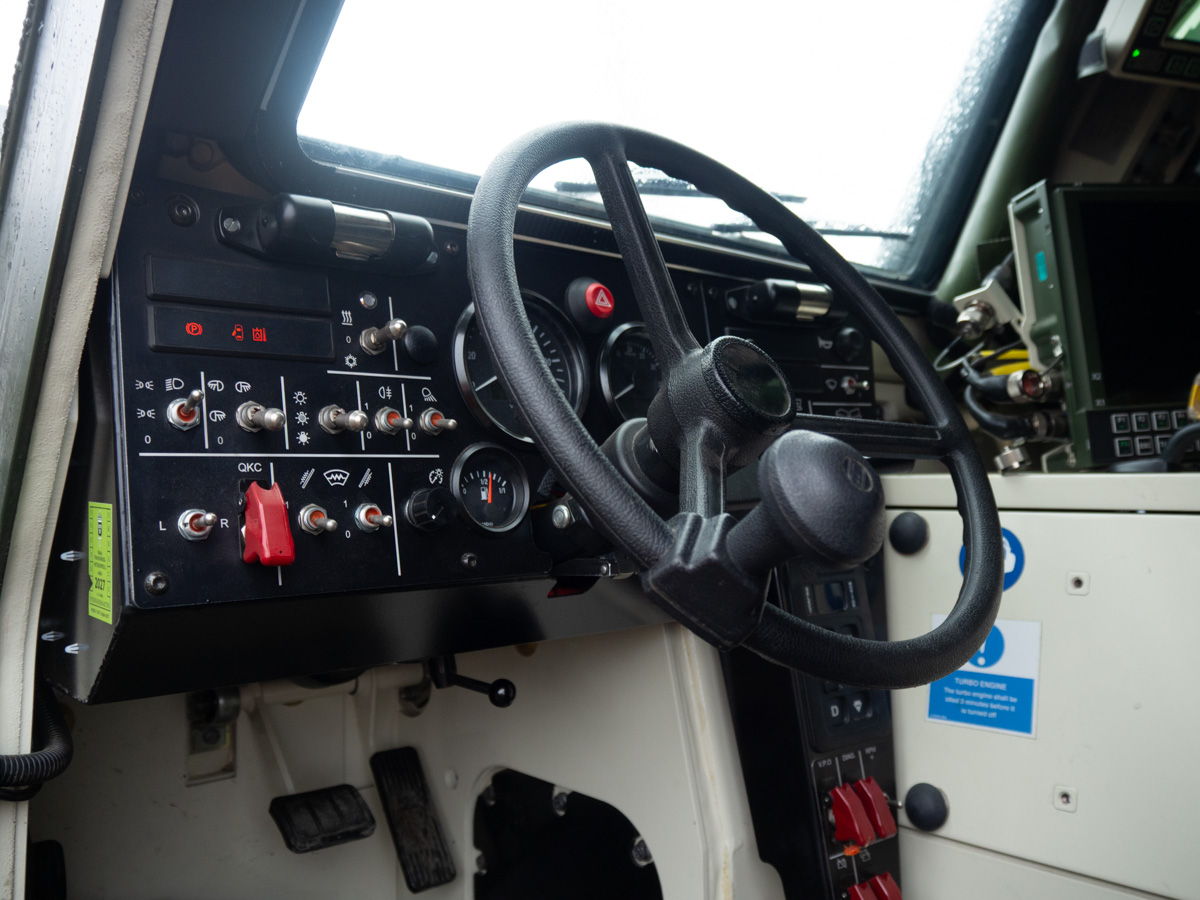
The driver’s seat was neither spacious nor ergonomic.
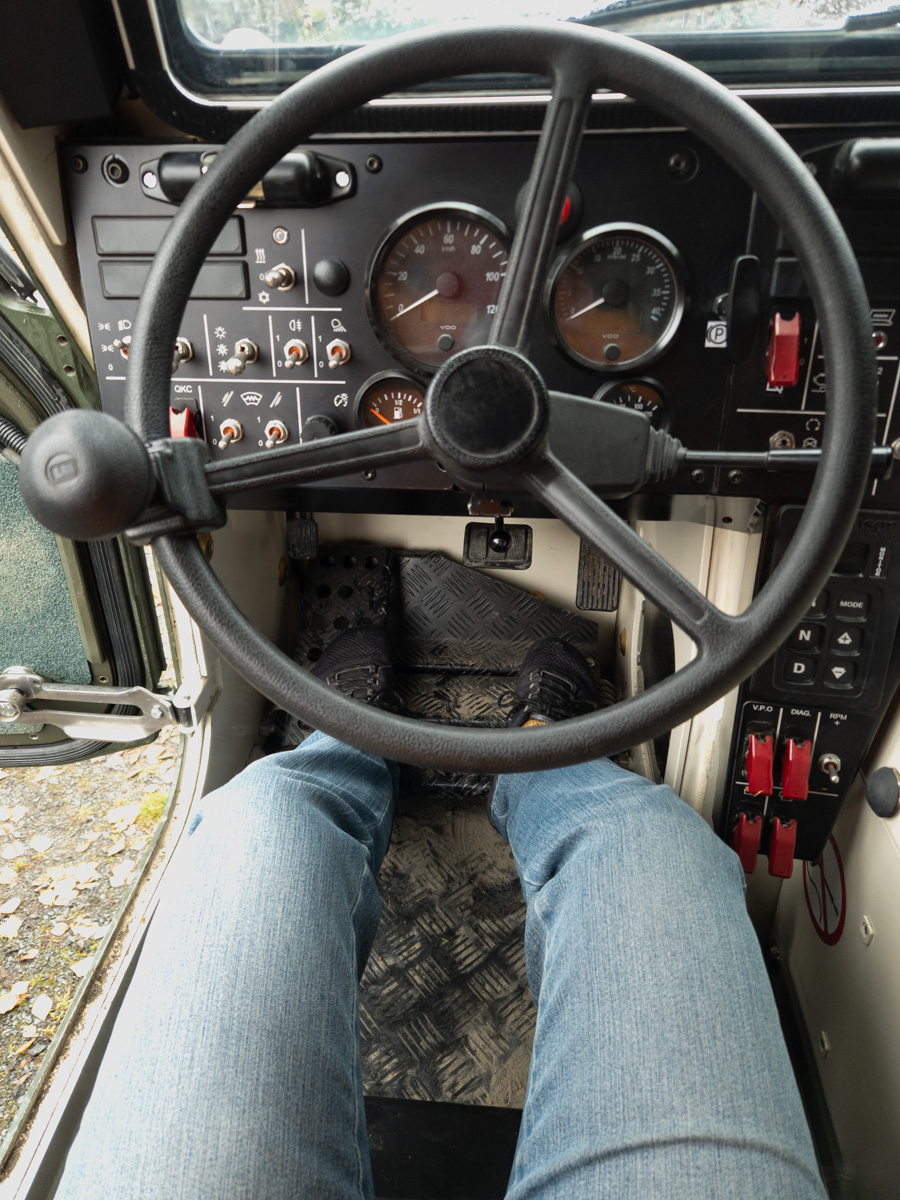
What it did have was lots of knobs and switches – the way I wish more cars were designed. Seriously, I’m so on board with military design principles. Just like I love the way that the troops all pack their backpacks the exact same way, so that anyone can locate the first-aid kit in anyone’s backpack, and that there are specific, pre-determined ways of expressing direction and distance to prevent confusion and misunderstanding.
To the other side of the main square there were several rows of older tanks. The oldest one was from just after WW2 – still in a driveable state. All of them must be, since they have clearly been driven here for today. Also: the foundation under the asphalt here must be something extra, to support all this weight.
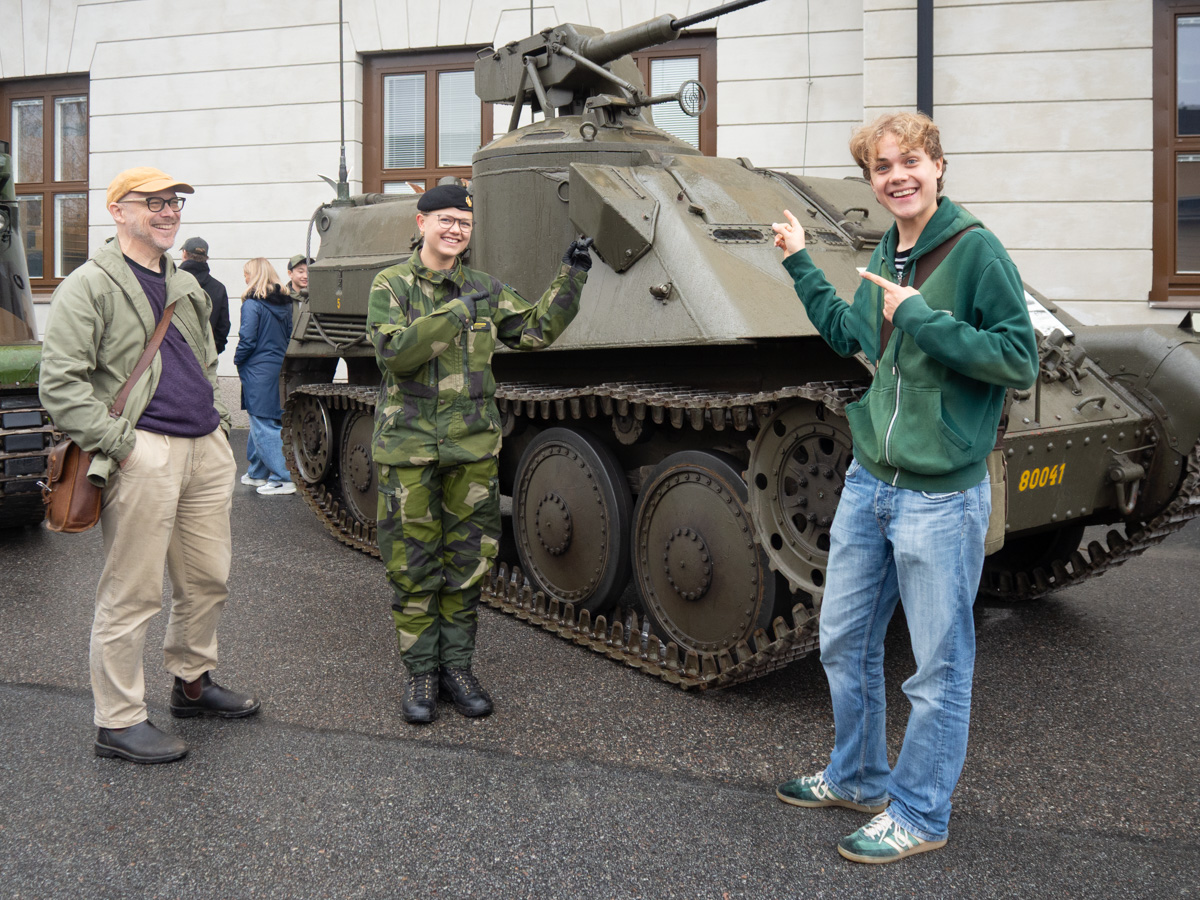
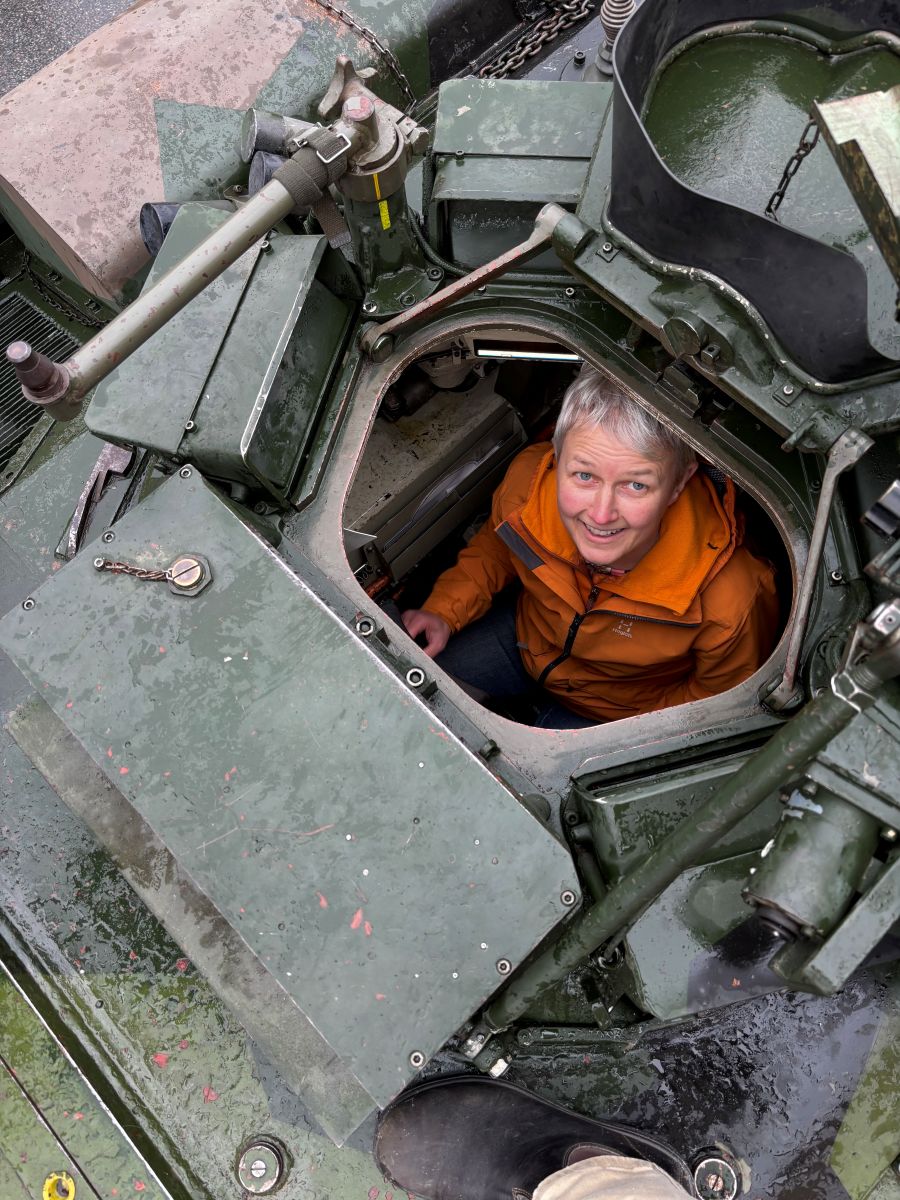
The newest of the old tanks was an S 103 from the 1960s. This one was open, and interested visitors could climb inside, which we of course did.
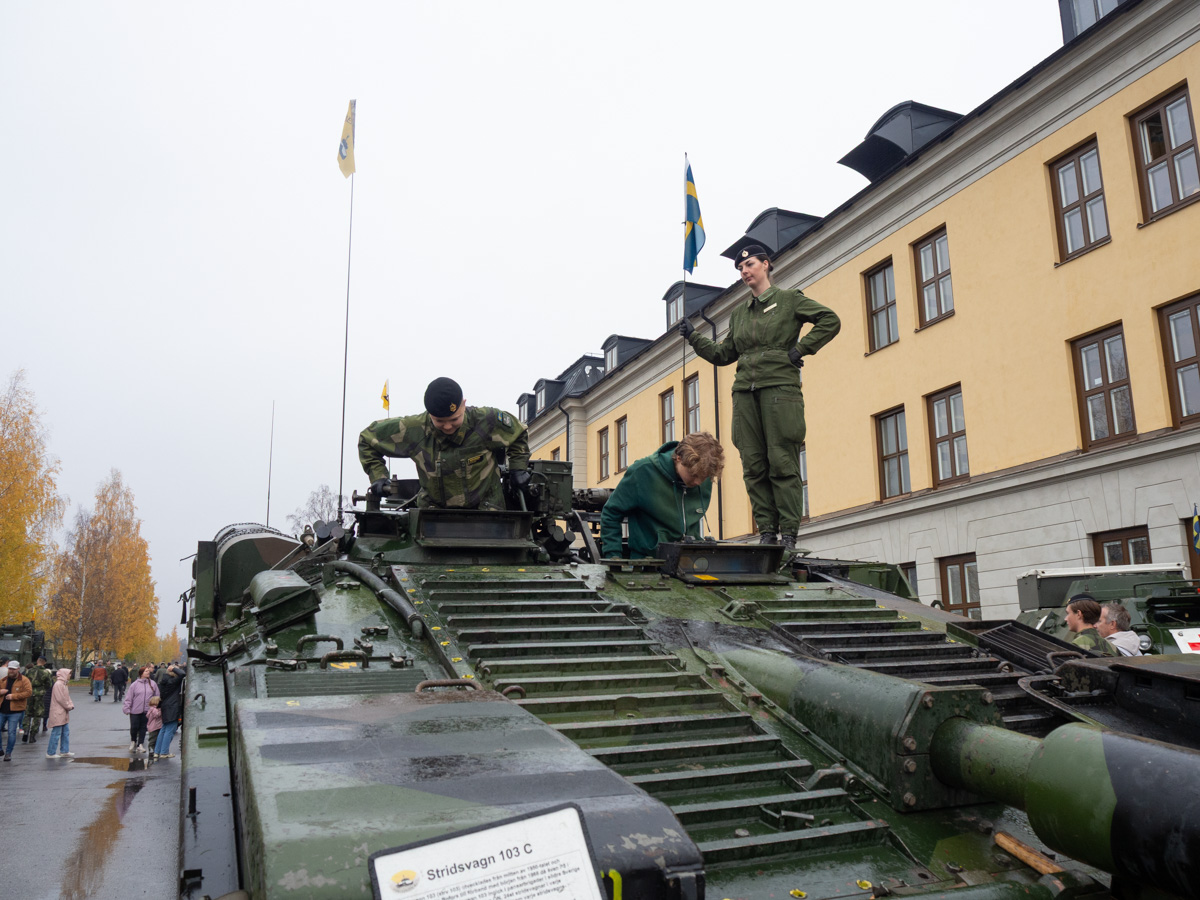
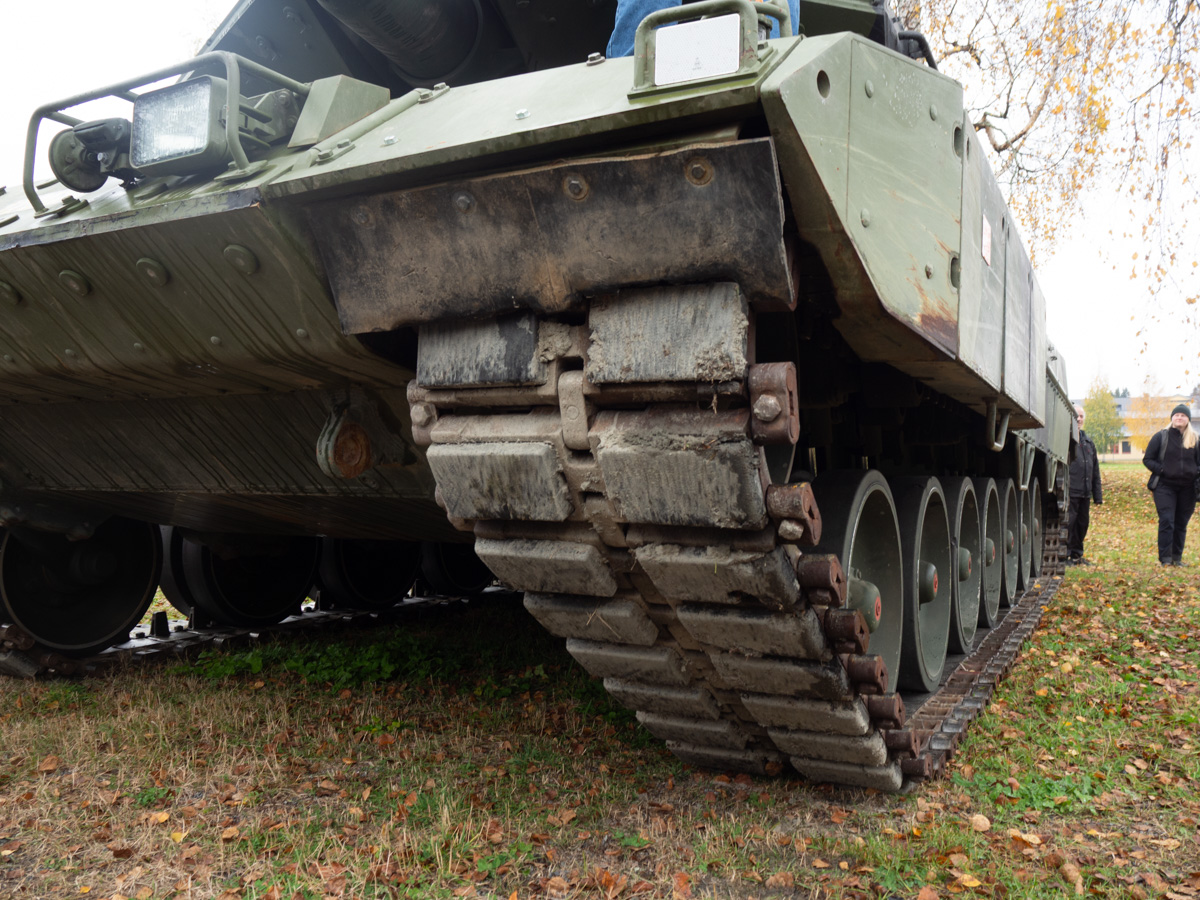
Across a field, there was all the modern equipment of an armoured unit. Tanks, of course, but also all kinds of interesting special equipment. There’s an armoured recovery vehicle, which is like a giant, armoured version of a tow truck. There’s a whole portable bridge, the Krigsbro 5, which is transportable on trucks and can be put in place in 3 hours.
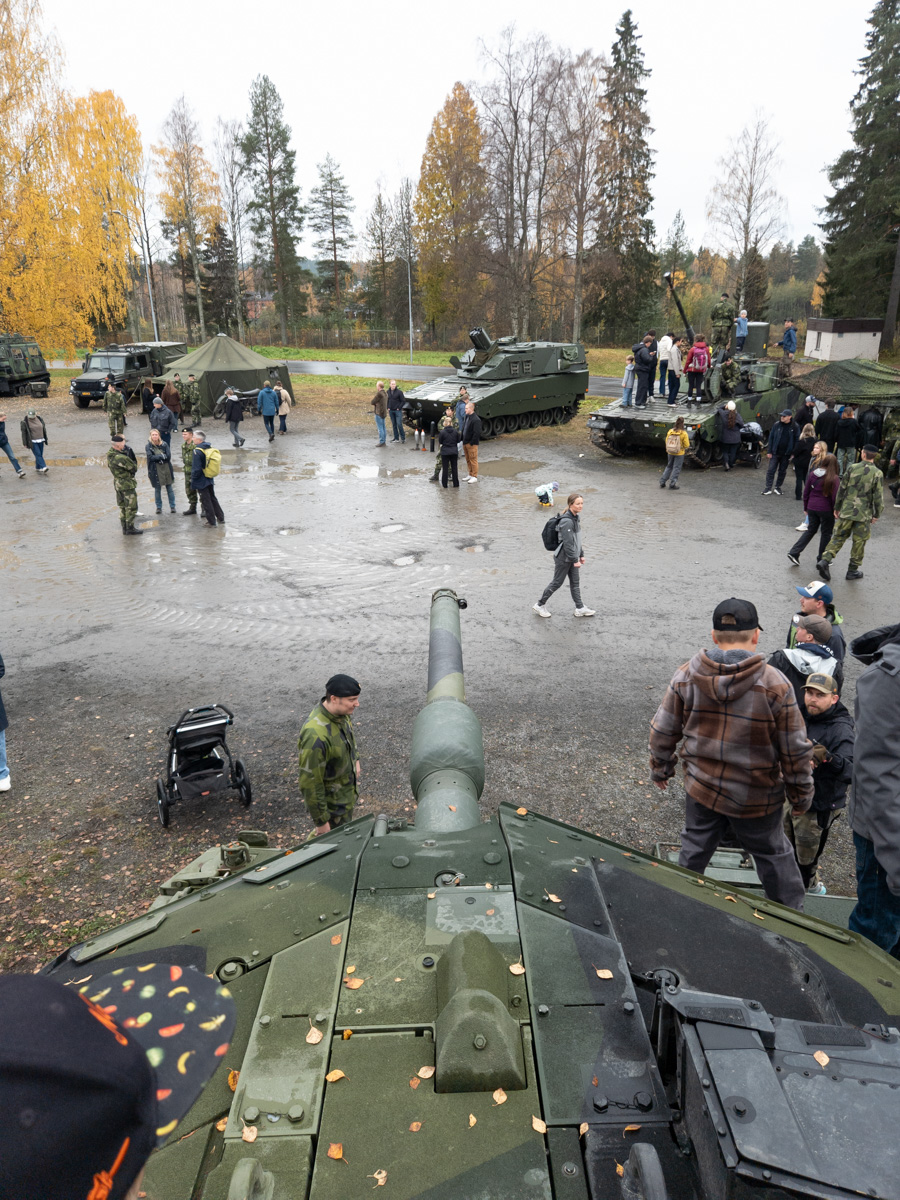
The S 122 is the newest model of tank in the Swedish army. This one we were not allowed inside of.
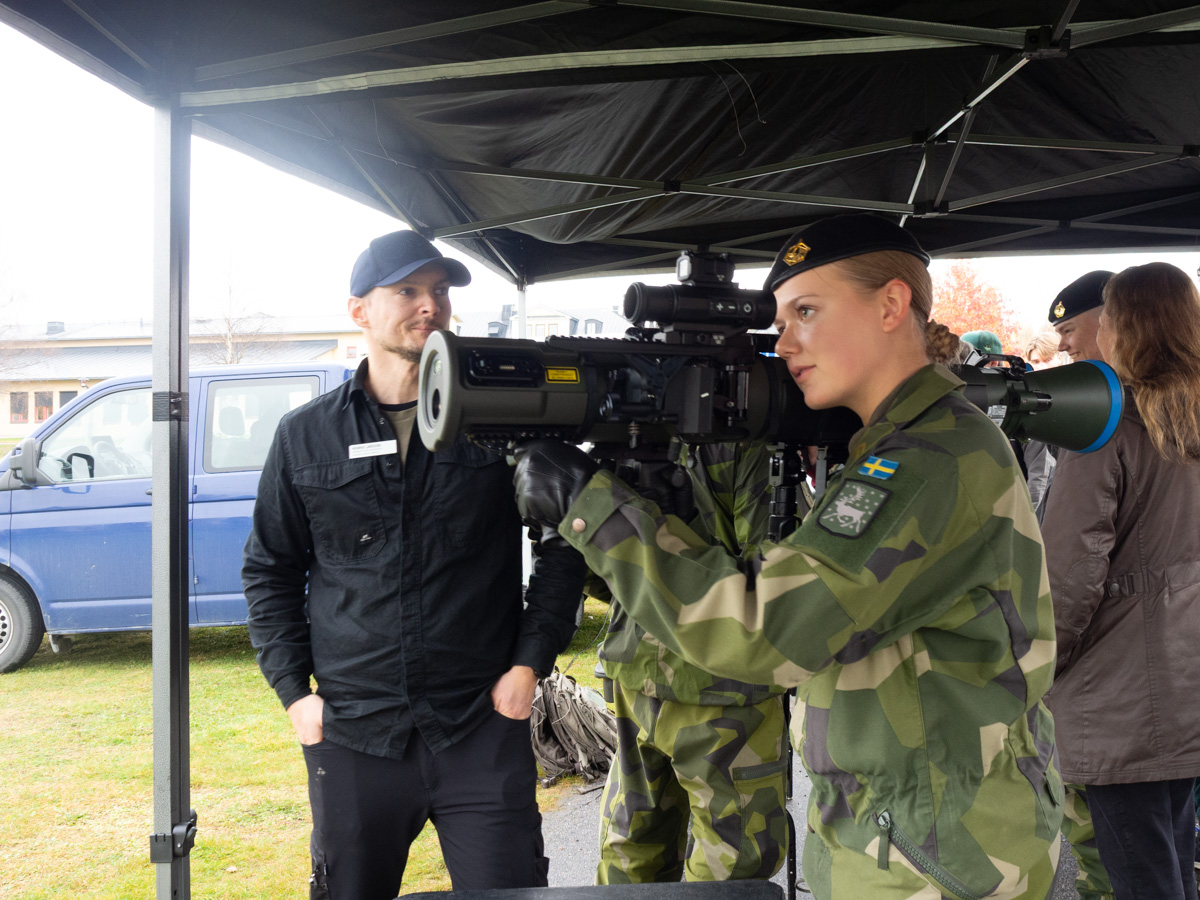
We tried out a recoilless rocket launcher simulator, which is supposedly like the real thing, but instead of shooting rockets, it shows you on a screen where the rocket would have hit. We were all very good at aiming.
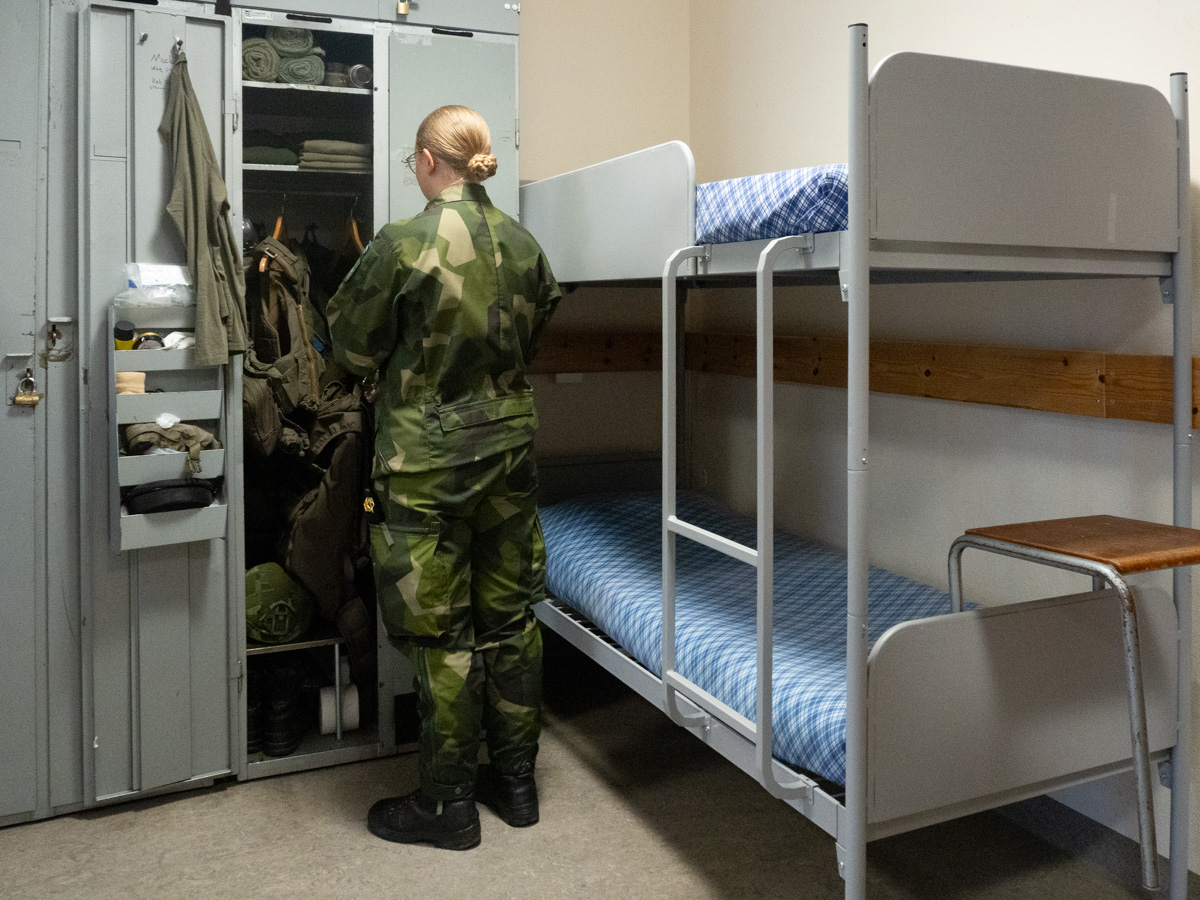
Of course we also got a chance to see Ingrid’s dormitory, and their (identically organized) lockers.
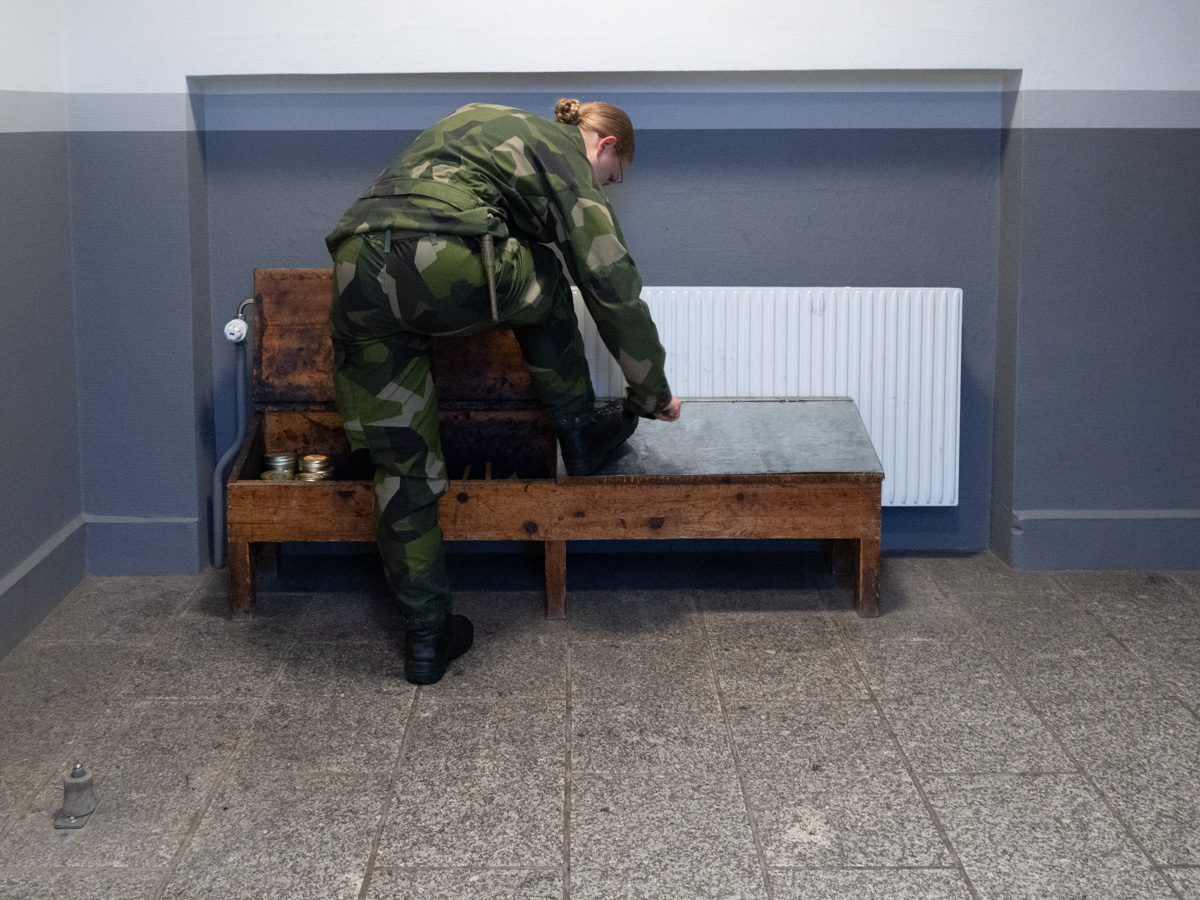
Fun fact: inside the entrance to the dormitory building, there was a boot care locker. It had all the signs of getting serious use. I knew the soldiers all need to look clean and tidy at all times, which includes well-polished boots, but I had never given any thought to just how that happens.